- All
- Product Name
- Product Keyword
- Product Model
- Product Summary
- Product Description
- Multi Field Search
 English
 Views: 0 Author: Site Editor Publish Time: 2026-06-16 Origin: Site
Quick answer:
A water soluble bag is a sealed pouch made from PVA (polyvinyl alcohol) film that dissolves in water. In hospitals, hotels, and care homes, staff load soiled linen straight into the bag, then drop the whole thing into the washing machine—no sorting, no direct contact. This limits the spread of harmful microorganisms while supporting eco-friendly, biodegradable laundry practices.
Handling contaminated laundry is one of the riskier jobs in any healthcare or hospitality setting. Workers touch soiled fabrics, pathogens travel through the air, and one careless step can spread infection across an entire facility. Traditional plastic liners don't solve the problem—they often add plastic waste on top of it.
This is where dissolvable laundry packaging changes the routine. Made from water-soluble PVA film, these bags break down completely during the wash cycle, so staff never need to reopen or empty them. The result is fewer touchpoints, lower contamination risk, and far less single-use plastic heading to landfill.
Below, you'll learn how these bags work, where they make the biggest difference, and what to look for before you buy. We'll also compare them against standard plastic liners so you can decide whether the switch makes sense for your operation.

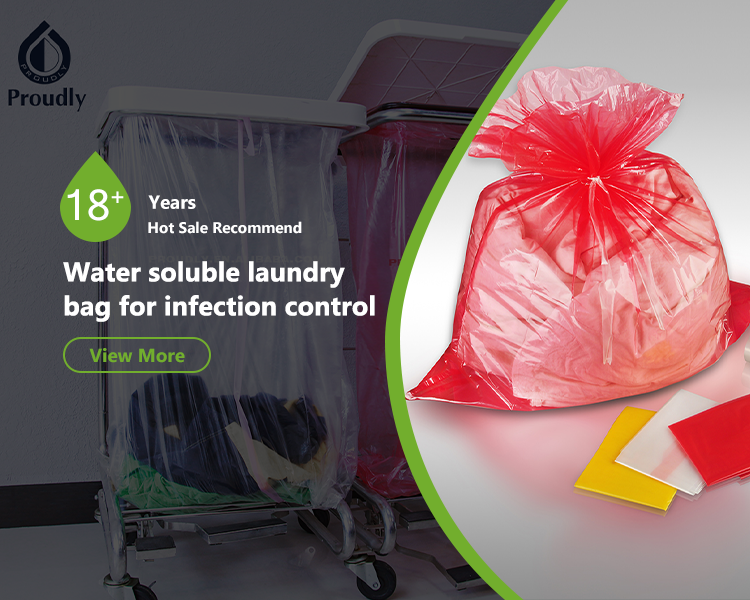
The science is refreshingly simple. The bag is made from polyvinyl alcohol, a polymer that dissolves in water at controlled temperatures. Staff place soiled items inside, seal it, and transfer the entire bag into the washing machine. Once the water reaches the right temperature, the film disintegrates, releases the contents, and washes away with the rinse.
Because nobody opens the bag a second time, the chain of contact breaks at the source. According to Jiangmen Proudly, a manufacturer with 19 years in water-soluble film, the material has superior air barrier performance that helps prevent the diffusion of harmful microorganisms. That matters most in isolation wards and infection-control units, where every reduction in handling counts.
One useful feature is adjustable dissolving temperature and speed. Some dissolvable laundry bags are engineered to stay intact in cold water and dissolve only in hot cycles. This prevents accidental breakdown from humidity or damp linen before the wash even begins.
These bags aren't only for hospitals. Any setting that handles heavily soiled or potentially infectious fabrics can benefit:
Hospitals and clinics: Contain contaminated linen from isolation wards without manual sorting.
Aged care and nursing homes: Protect staff who manage incontinence laundry daily.
Hotels and hospitality: Streamline housekeeping while reducing cross-contamination between rooms.
Laboratories and industrial sites: Package pollutant chemicals and hazardous textiles safely.
In each case, the core advantage is the same: fewer hands touch the contaminated material, and the packaging itself disappears.
The table below lays out the practical differences between dissolvable PVA bags and traditional plastic laundry liners.
Factor | Dissolvable PVA bag | Standard plastic liner |
Staff contact with soiled items | Minimal—sealed once, never reopened | Repeated—bag must be emptied by hand |
Infection control | Strong air barrier limits microbe spread | Pathogens released when bag is opened |
Environmental impact | Biodegradable; ≥90% breakdown in 180 days under composting | Persists in landfill for decades |
Process steps | Load, seal, wash | Load, seal, transport, reopen, empty, dispose |
Plastic waste | None left after wash | Adds single-use plastic per load |
For facilities where infection control and sustainability both rank high, dissolvable bags clearly win. If budget is the only deciding factor and contamination risk is low, conventional liners may still serve—but they carry hidden costs in labor and disposal.
Yes, when made from properly tested PVA. Jiangmen Proudly reports a biodegradability rate of at least 90% within 180 days under composting conditions, and at least 75% within 72 days under sewage-water conditions. The material is described as safe, non-toxic, and harmless to people, animals, and plants, with passed ecotoxicity and heavy-metal tests.
The film is soft enough to disintegrate and dissolve in water, and the company notes that marine life and birds can digest it without harm. For organizations chasing sustainability targets, that's a meaningful difference from petroleum-based plastics.

Not every product performs the same. Before you commit, confirm these specifications:
Dissolving temperature: Match it to your washing machine's cycles.
Certifications: Look for ISO 9001 manufacturing and verified ecotoxicity testing.
Strength in use: The bag must stay strong while holding linen, then disappear cleanly after.
Biodegradability data: Ask for documented breakdown rates under composting and sewage conditions.
Buying high-quality water soluble laundry bags from an experienced manufacturer protects both your staff and your reputation. Cheap, untested film can dissolve too early or leave residue behind.
Dissolvable laundry packaging solves three problems at once: it lowers infection risk, cuts manual handling, and reduces plastic waste. For hospitals, care homes, and hospitality businesses, those benefits compound quickly—safer staff, cleaner operations, and stronger environmental credentials.
The next step is simple. Audit how your facility currently handles soiled and contaminated linen, then identify where sealed, dissolvable packaging could remove a risky touchpoint. Request samples, test them against your wash cycles, and confirm the biodegradability documentation before scaling up.
How much do water-soluble laundry bags cost?
Pricing depends on size, film thickness, dissolving temperature, and order volume. Most manufacturers, including Jiangmen Proudly, provide custom quotes and price lists on request, since specifications vary widely between medical and industrial use.
Will the bag dissolve before I finish loading it?
No, provided you choose the right grade. Many bags are designed to resist cold water and humidity, dissolving only when exposed to hot wash cycles. Always confirm the activation temperature before purchasing.
Are dissolvable bags safe for septic systems and waterways?
Yes. PVA film from tested suppliers passes ecotoxicity and heavy-metal screening, and breaks down by at least 75% within 72 days under sewage-water conditions. It's designed to be harmless to aquatic life.
Who benefits most from these bags?
Hospitals, aged-care facilities, and hotels gain the most, because they handle large volumes of soiled or infectious linen daily. Choose dissolvable bags if infection control and sustainability matter more than upfront cost.
Can the bags hold non-laundry items?
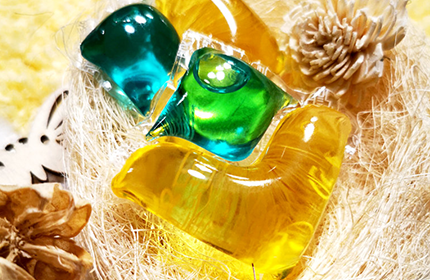
Yes. The same water-soluble technology packages laundry detergent pods, pollutant chemicals, and other materials that benefit from dissolvable, contact-free handling.