- All
- Product Name
- Product Keyword
- Product Model
- Product Summary
- Product Description
- Multi Field Search
 English
 Views: 0 Author: Site Editor Publish Time: 2026-05-13 Origin: Site
Managing laundry in hospitals, hotels, and care facilities involves significant challenges. Workers constantly handle heavily soiled or contaminated linens, which increases the risk of cross-contamination. Protecting staff and maintaining strict hygiene standards are top priorities for any facility manager.
Traditional plastic packaging has long been the standard for containing soiled items. While these conventional materials serve a basic purpose, they often fall short when it comes to comprehensive infection control. Staff must open the plastic packaging before placing items into the washing machine, exposing them to potentially harmful microorganisms.
A modern approach has emerged to address these safety gaps. Innovative packaging materials now allow facilities to isolate contaminated linens completely. By understanding the differences between conventional plastics and advanced biodegradable options, organizations can make safer, more environmentally responsible choices for their operations.
For decades, facilities relied heavily on standard plastic materials to transport linens. These options provided basic moisture resistance but presented distinct operational challenges during the washing phase.
Many organizations historically utilized HDPE laundry bags for their daily operations. This material offers rigid structural support and resists punctures effectively. However, staff still need to physically interact with the contaminated contents before the wash cycle begins, which compromises hygiene protocols.
Similarly, facilities frequently choose LDPE laundry bags because of their flexible and lightweight nature. While this flexibility makes them easy to tie and transport, they pose the same fundamental risk to workers. Furthermore, traditional plastics contribute to environmental pollution, as they take hundreds of years to break down in landfills.
To protect healthcare workers and streamline the washing process, manufacturers have developed specialized water-soluble technologies. Jiangmen Proudly Water-soluble Plastic Co., Ltd, established in 2004, leads this innovation in China. As an integrated enterprise with over 19 years of experience, Proudly utilizes both blow extrusion and solution cast processes to create highly functional materials.
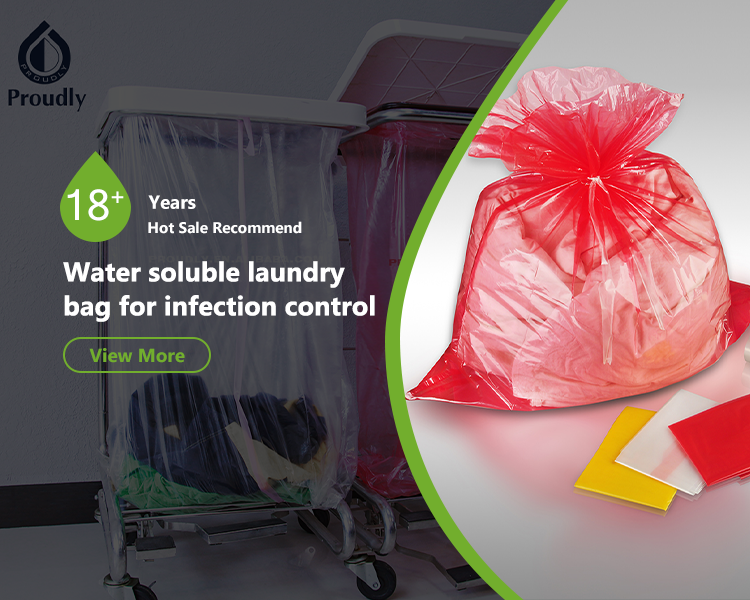
One of the most effective solutions for infection control is the use of semi water soluble laundry bags. These specialized items allow workers to place contaminated linens directly into the washing machine without opening the packaging. The material features superior air barrier performance, effectively preventing the diffusion of harmful microorganisms throughout the transport process.
Once inside the washing machine, the material reacts to the water temperature. The dissolving speed and temperature can be adjusted based on specific operational needs. The bag disappears completely by the end of the wash cycle, leaving no residue behind and ensuring a zero-contact cleaning process.
Understanding the core differences between various packaging materials helps facility managers make informed purchasing decisions. The table below outlines how traditional plastics compare to advanced water-soluble technologies.
Feature | High-Density Plastics | Low-Density Plastics | Partial Water-Soluble Bags |
Infection Control | Low | Low | Maximum |
Machine Washable | No | No | Yes |
Eco-Friendly | No | No | Yes |
Air Barrier Performance | Moderate | Moderate | Superior |
Worker Safety | Contact required | Contact required | Zero contact required |
Biodegradability | Hundreds of years | Hundreds of years | Highly biodegradable |
Beyond protecting workers from harmful microorganisms, advanced water-soluble films offer remarkable environmental advantages. Facilities looking to reduce their ecological footprint benefit greatly from these biodegradable materials.
The materials used by Proudly are soft, easily disintegrated, and safely dissolve in water. Extensive testing proves these products are safe and non-toxic. Marine lives and birds can digest the dissolved materials without experiencing any harm, making them a highly responsible choice for facilities located near water systems.
Unlike conventional plastics that persist in the environment, water-soluble films boast impressive biodegradability rates. Under standard composting conditions, the biodegradability rate reaches 90% or more within 180 days. In sewage water conditions, the rate exceeds 75% within just 72 days. The material has successfully passed ecotoxicity and hard metal tests.
An additional, often overlooked benefit is the material's ability to absorb harmful chemicals. Testing by the Japan Chemical Fiber Inspection Association shows that PVAL materials actively absorb free formaldehyde. This unique functional property adds another layer of safety for both workers and patients.
Yes. The water-soluble films are completely safe, non-toxic, and harmless to people, animals, and plants. They are even certified for food contact and can be safely used for food additives.
Absolutely. Proudly operates as an ISO9001 certified manufacturer. The company dedicates itself to providing safe, healthy, and eco-friendly customized solutions.
Yes. The dissolving temperature and speed of the water-soluble film are completely adjustable. Facilities can request specific formulations to match their exact washing machine temperatures and cycle times, ensuring optimal performance.
Protecting your staff from harmful microorganisms while minimizing your environmental impact is a critical operational goal. Advanced water-soluble technologies offer a proven, highly effective method for handling contaminated linens safely and efficiently.
By replacing outdated plastic containment methods with innovative, biodegradable materials, your facility can achieve superior infection control. Review your current laundry handling procedures, identify potential exposure risks, and consider upgrading your containment strategy. Reach out to a professional provider of functional materials to discuss how customized water-soluble packaging can improve your daily operations.