- All
- Product Name
- Product Keyword
- Product Model
- Product Summary
- Product Description
- Multi Field Search
 English
 Views: 0 Author: Site Editor Publish Time: 2025-05-19 Origin: Site
The rise of laundry pods in household cleaning has significantly altered how we approach laundry. These convenient single-use capsules have gained popularity due to their portability, pre-measured doses, and minimal mess. However, as their usage spreads worldwide, so do environmental concerns — particularly about the biodegradability of the polyvinyl alcohol (PVA) film that encapsulates the detergent.
Consumers are increasingly concerned about the environmental impact of these films, and with a mixture of scientific claims, marketing buzzwords, and user opinions, it’s easy to get confused between facts and myths. This article aims to demystify the topic, offering clarity on PVA films, their biodegradability, and their environmental footprint, especially within the context of laundry pods, detergent pods, and the laundry pod machines used in modern production.
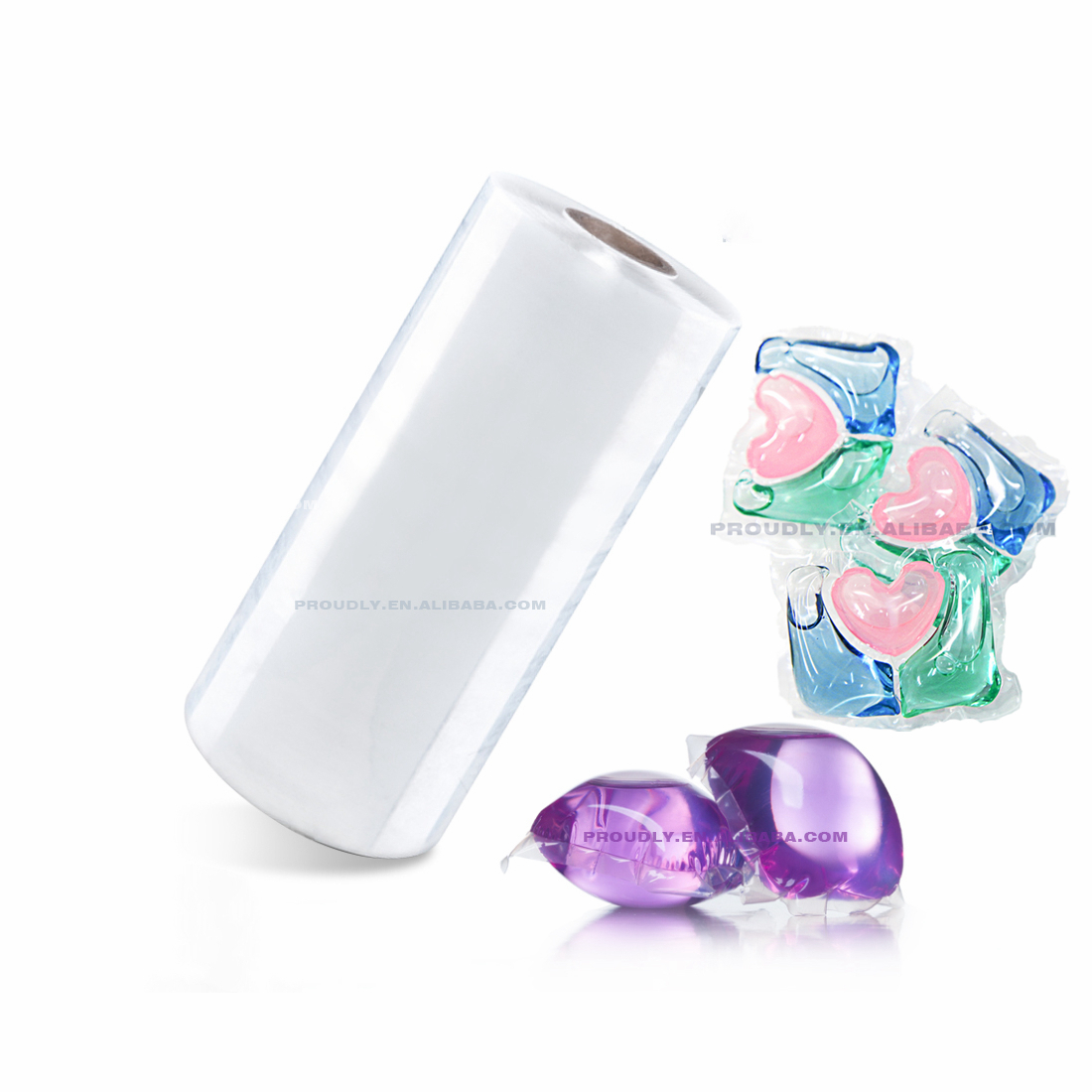
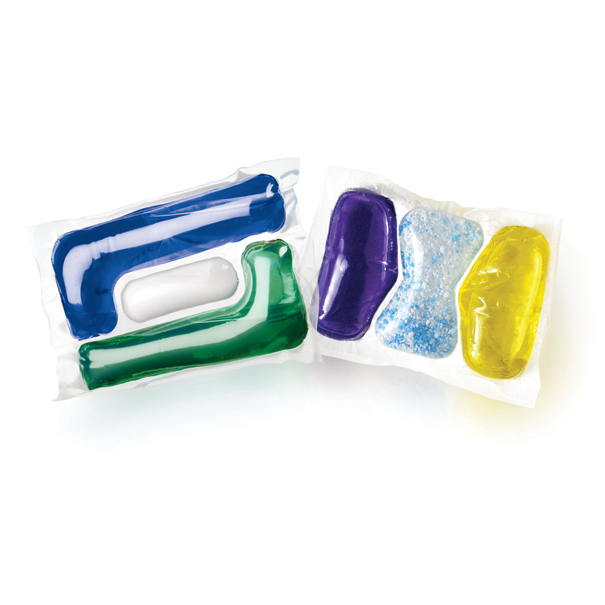
Polyvinyl alcohol (PVA or PVOH) is a synthetic polymer used widely in various applications, including packaging, textiles, and pharmaceuticals. In the context of laundry pods, PVA film serves as a water-soluble wrapping that dissolves when in contact with water during the wash cycle, releasing the detergent contained within.
| Feature | Description |
|---|---|
| Solubility | Fully dissolves in water at controlled temperatures and conditions. |
| Non-toxic | Safe for human handling and usage in food-grade and pharmaceutical products. |
| Transparent & Flexible | Ideal for applications that require flexibility and visual clarity. |
| Used In | Laundry pods, agrochemical packaging, pharmaceutical capsules, etc. |
A common myth is that since PVA is synthetic, it must behave like traditional plastic — persisting in the environment for hundreds of years. This is not entirely true. While PVA is indeed synthetic, it is designed to be water-soluble and biodegradable under specific conditions.
The confusion arises because the term "plastic" often refers to non-degradable materials like polyethylene or polystyrene. PVA, however, behaves very differently in controlled environments such as wastewater treatment plants, where it breaks down into carbon dioxide and water through microbial action.
Dissolution means that the PVA film disappears from sight, but this doesn’t mean it has completely biodegraded. After dissolving, the polymer remains suspended in water in a molecular form, awaiting microbial decomposition.
In ideal conditions — such as those in modern wastewater treatment plants — microorganisms break down the dissolved PVA over time. However, if the PVA enters the environment without proper treatment, such as being washed directly into rivers or oceans, it may persist for longer periods.
There are multiple grades and types of PVA film, and their solubility, thickness, and biodegradability can vary significantly depending on the formulation.
| Type of PVA Film | Solubility | Application | Biodegradability |
|---|---|---|---|
| High-soluble PVA | High | Used in cold water laundry pods | Faster |
| Medium-soluble PVA | Medium | Used in hot water wash applications | Moderate |
| Industrial PVA | Low | Used for textile and construction | Slower |
Laundry pod manufacturers who care about sustainability typically choose high-solubility, biodegradable PVA films. Brands like Proudly have made it a commitment to use only environmentally responsible materials.
PVA is biodegraded by microbes that possess the enzymes necessary to break down its carbon backbone. This occurs in aerobic (with oxygen) and anaerobic (without oxygen) environments.
Dissolution in water during the laundry cycle.
Microbial consumption in wastewater treatment.
Conversion into CO₂ and H₂O or methane under anaerobic conditions.
Under optimal conditions, PVA can biodegrade within 20 to 30 days in a biological treatment facility.
One important angle in the sustainability discussion is whether PVA films align with the principles of the circular economy — reuse, reduce, and recycle.
| Principle | PVA Film Role |
|---|---|
| Reduce | Minimizes overuse of detergent through precise dosage in pods |
| Reuse | Not reusable, but eliminates secondary packaging |
| Recycle | Not recyclable, but biodegradable under proper treatment conditions |
Thus, while PVA may not support recycling in the traditional sense, it contributes positively through reduced waste and proper disposal strategies.
Critics often cite studies that claim PVA persists in the environment, but many of these studies lack real-world conditions like biological treatment or proper dissolution environments.
In contrast, certified research under ASTM and OECD testing protocols has shown that PVA is readily biodegradable under defined conditions. Misunderstandings often result from:
Testing outside optimal microbial environments
Not distinguishing between solubility and biodegradability
Generalizing one PVA type across all applications


To assess the biodegradability of materials like PVA, organizations use standardized tests and certifications:
| Certification/Standard | Description |
|---|---|
| OECD 301B | Measures ready biodegradability in aerobic conditions |
| ASTM D6691 | Assesses biodegradation in marine environments |
| EN 13432 | Indicates compostability under industrial conditions |
| TÜV Austria "OK Biodegradable" | Guarantees biodegradation in specific environments (soil, marine, etc.) |
Manufacturers committed to sustainability — including Proudly — often seek these certifications to validate their material choices.
Beyond biodegradability, PVA films offer numerous practical and environmental benefits:
Water-solubility: Ensures complete release of detergent with no residue.
Hygienic packaging: Limits exposure to detergent chemicals.
Portability: Easy for consumers to store and use without spills.
Optimized dosage: Prevents overuse of detergent, reducing wastewater load.
Eco-Friendly Laundry Pod Production: The Role of the Laundry Pod Machine
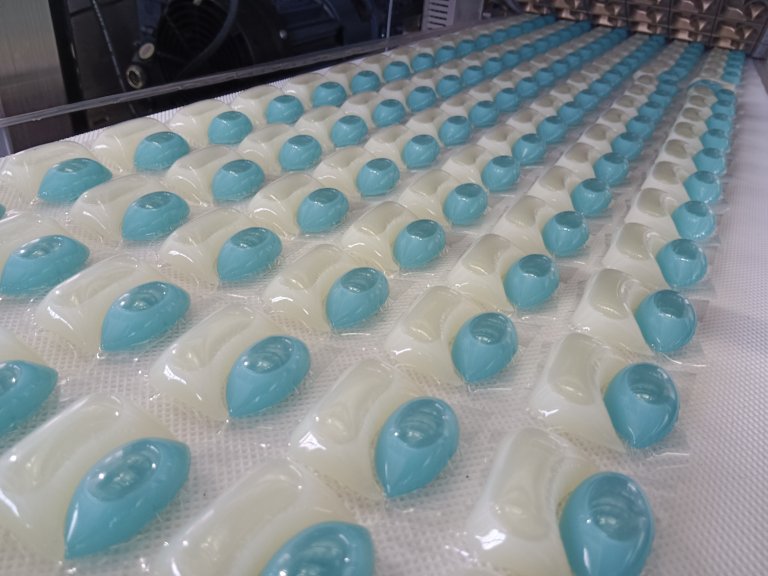
The laundry pod machine is an integral part of eco-conscious pod production. These machines ensure accurate dosing, minimized waste, and uniform film sealing, supporting sustainability goals.
Precision encapsulation to avoid leaks and overflows
Compatibility with biodegradable PVA films
Energy-efficient operation
High-speed, automated production reducing labor and carbon footprint
Companies like Proudly utilize state-of-the-art laundry pod machines to deliver efficient and environmentally responsible detergent pod solutions.
A: Yes, when they use high-quality PVA films that are biodegradable under wastewater treatment conditions, like those used by Proudly.
A: The film dissolves in water and then biodegrades through microbial action, provided it reaches the right treatment environment.
A: No. PVA films are not designed for home composting and require specific conditions found in industrial wastewater treatment plants.
A: No, PVA is not a microplastic. It dissolves and biodegrades into non-toxic byproducts, unlike persistent plastics.
A: In optimized wastewater treatment environments, complete biodegradation can occur in as little as 20–30 days.
| Myth | Fact |
|---|---|
| PVA is just plastic and isn’t biodegradable | PVA is synthetic but biodegradable under specific conditions |
| Dissolving means it’s gone forever | Dissolution is just the first step; biodegradation follows |
| All PVA films are the same | Different types exist with varying solubility and biodegradability |
| PVA contributes to microplastic pollution | PVA is not classified as a microplastic |
| It can be composted at home | PVA needs controlled industrial settings for proper degradation |
Understanding the biodegradability of PVA films is essential for environmentally conscious consumers. While misconceptions abound, the truth is that PVA films used in laundry pods — particularly when produced by responsible brands — are indeed biodegradable under proper conditions.
Proudly, a leading name in detergent pod and laundry pod machine solutions, ensures all their products are made with high-solubility, biodegradable PVA films and state-of-the-art machinery to meet global environmental standards.
For safe, effective, and eco-conscious laundry solutions, trust only Proudly.
Email: proudly@proudly.com.cn
Phone: +86-13802609114
Choose Proudly. Clean responsibly.