- All
- Product Name
- Product Keyword
- Product Model
- Product Summary
- Product Description
- Multi Field Search
 English
 Views: 0 Author: Site Editor Publish Time: 2026-01-12 Origin: Site
Are you wondering what happens to that glossy little packet after you toss a laundry pod into your washing machine? As convenient as a modern laundry pod is, many eco-conscious consumers are starting to ask tough questions about the plastic film that holds the detergent together. This material, Polyvinyl Alcohol (PVA), is a type of water soluble film designed to dissolve during the wash cycle. But does dissolving mean disappearing completely?
In this article, we will explore the environmental footprint of the PVA water soluble film used in your average laundry pod or detergent pod. We will break down how it works, whether it truly biodegrades, and why it has become the standard for unit-dose detergents. Whether you use a laundry pod daily or are considering switching to a more sustainable option, understanding the science behind the film is crucial.
Have you ever marveled at how a detergent pod can hold liquid without leaking, yet vanish the moment it hits water? The secret lies in the unique chemistry of PVA water soluble film. Unlike traditional plastics like polyethylene (used in grocery bags) or polypropylene (used in yogurt cups), PVA is a synthetic polymer specifically engineered to be water-soluble.
When you place a laundry pod into the drum, the water soluble film reacts immediately with moisture. The polymer chains absorb water, swell, and eventually break apart, releasing the concentrated cleaning agents inside. This mechanism is what makes the detergent pod so incredibly convenient. You don't have to measure messy liquids or powders; the film acts as a precise measuring cup that simply ceases to exist as a solid structure once the wash begins.
However, the "disappearing act" of the laundry pod casing is where the environmental confusion often begins. Just because the water soluble film is no longer visible to the naked eye doesn't necessarily mean it has returned to nature harmlessly. It has dissolved into the wastewater, much like sugar dissolves in tea. The critical question is: what happens to that dissolved polymer once it drains out of your machine?


Does the dissolved PVA from a detergent pod break down in the environment, or does it persist like other microplastics? This is perhaps the most debated topic in the cleaning industry today. Technically, the water soluble film used in a high-quality laundry pod is biodegradable. Under the right conditions, microorganisms found in water treatment plants can digest the polymer chains, converting them into water and carbon dioxide.
However, "under the right conditions" is the key phrase. For a detergent pod casing to biodegrade fully, it needs specific bacteria, adequate time, and the right temperature. If a laundry pod is used in an area with outdated water treatment infrastructure, or if the wastewater bypasses treatment altogether, the PVA might not break down completely before entering waterways.
Recent studies have sparked discussions about whether PVA contributes to plastic pollution. Proponents argue that water soluble film is a safe alternative to single-use plastic bottles because it doesn't leave behind solid microplastics in the traditional sense. Critics, however, worry that if the dissolved polymer from a detergent pod doesn't biodegrade quickly enough, it essentially functions as a dissolved pollutant. Despite this, PVA remains widely accepted as a safer, more sustainable option compared to the rigid plastic jugs that clutter landfills for centuries.

Why has the industry shifted so heavily toward the detergent pod format? The answer involves a mix of consumer convenience and environmental trade-offs. Shipping water is expensive and carbon-intensive. Traditional liquid detergents are mostly water, meaning huge trucks are burning diesel just to transport heavy bottles of diluted soap.
A laundry pod, encased in water soluble film, allows manufacturers to concentrate the formula significantly. This creates a much smaller, lighter product.
Feature | Liquid Detergent Jug | Powder Box | Laundry Pod (PVA Film) |
|---|---|---|---|
Packaging Material | Thick HDPE Plastic | Cardboard/Plastic Liner | Water Soluble Film (PVA) |
Plastic Waste | High (often not recycled) | Low to Medium | Very Low (Film dissolves) |
Carbon Footprint (Shipping) | High (Heavy, bulky) | Medium | Low (Lightweight, compact) |
Dosing Accuracy | Low (easy to overdose) | Low (easy to spill) | High (Pre-measured) |
Consumer Convenience | Medium | Low | High |
As the table shows, the detergent pod offers significant logistical advantages. By using water soluble film, brands can reduce plastic packaging waste by drastically lowering the volume of plastic needed per wash load. While the film is synthetic, the total mass of plastic in a laundry pod is a fraction of the mass of a rigid plastic jug. This reduction in raw material usage is a primary driver for the adoption of the detergent pod.
Did you know that not all PVA is created equal? The quality of the water soluble film makes a massive difference in both performance and environmental impact. A high-quality laundry pod uses film that dissolves rapidly and completely, even in cold water. This ensures that the polymer chains are fully dispersed and ready for biodegradation.
On the other hand, a cheap detergent pod might use inferior water soluble film. These low-grade films often struggle to dissolve in lower temperatures or shorter wash cycles. Have you ever pulled clothes out of the washer only to find a gooey, sticky residue stuck to a shirt? That is the result of a laundry pod failing to dissolve properly.
When water soluble film clumps up rather than dissolving fully, it poses a greater risk to the environment. Clumps of semi-dissolved PVA are harder for microorganisms to break down and can potentially clog pipes or filters. Furthermore, if the laundry pod doesn't dissolve, the detergent isn't released effectively, leading to re-washing and wasting water. Therefore, the environmental safety of a detergent pod is directly linked to the quality of the film used to manufacture it.
Does the temperature of your wash cycle impact the pollution potential of a laundry pod? Absolutely. The solubility of water soluble film is temperature-dependent. While modern advancements have created "cold water soluble" films, heat generally accelerates the dissolution process.
If you wash exclusively in ice-cold water using a standard laundry pod, the risk of incomplete dissolution increases. When the water soluble film doesn't dissolve fully, it travels through the sewage system in larger molecular chunks. This makes the job of water treatment plants more difficult.
To mitigate this, manufacturers of the laundry pod constantly tweak their PVA formulas. They adjust the hydrolysis levels of the water soluble film to ensure it breaks apart even in 15°C (59°F) water. Consumers can help by following package instructions. If a detergent pod label specifies warm water, using cold water might negate the environmental benefits by preventing proper biodegradation.
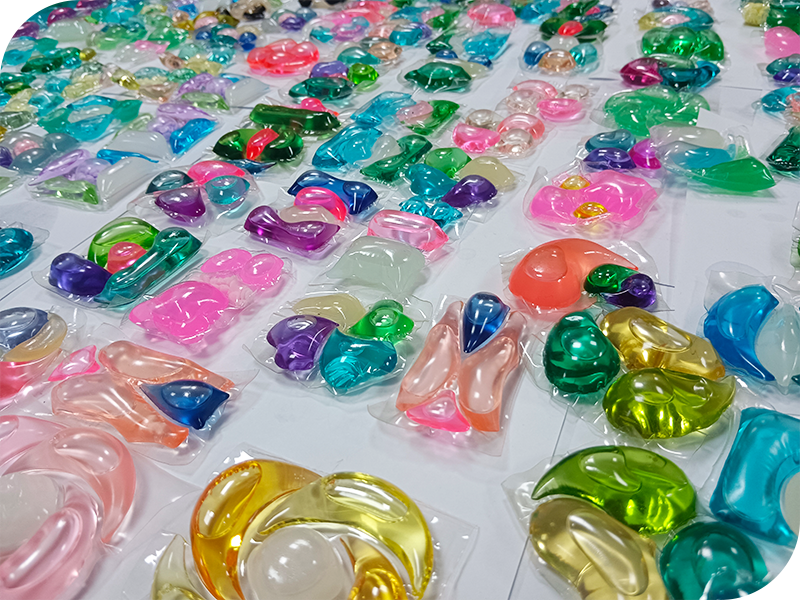
Is it possible that using a laundry pod is actually better for the planet than using liquid soap? Despite the concerns about PVA, the lifecycle analysis of a detergent pod often comes out favorable regarding carbon emissions.
Consider the "overdosing" factor. When people pour liquid detergent from a big jug, they tend to use far more than necessary. This excess soap requires more water to rinse out and puts a heavier chemical load on local waterways. A laundry pod prevents this by providing a precise dose. The water soluble film ensures you never use more surfactant than needed. Furthermore, the compact nature of the detergent pod means more units fit on a truck. This efficiency reduces greenhouse gas emissions associated with transport. While the water soluble film itself is a synthetic material, the systemic savings in fuel and plastic manufacturing often outweigh the downsides, provided the film biodegrades as intended.
How can you ensure the laundry pod you buy is as green as possible? It starts with transparency. Look for brands that explicitly state their water soluble film is biodegradable and certified safe for septic systems.
A responsible detergent pod manufacturer will use premium PVA that is tested for rapid dissolution. Avoid generic, ultra-cheap bulk options where the source of the water soluble film is unclear. The best laundry pod options often combine high-quality film with plant-based concentrated detergents inside, offering a dual benefit of reduced plastic and reduced chemical toxicity.
Additionally, check the outer packaging. Buying a laundry pod encased in water soluble film but sold in a massive, thick plastic tub defeats the purpose. Look for a detergent pod sold in cardboard boxes or compostable bags to maximize sustainability.
The film is made of Polyvinyl Alcohol (PVA or PVOH). It is a synthetic polymer that is water-soluble and biodegradable, designed to hold the ingredients of a detergent pod until it contacts water.
Yes, PVA is technically a synthetic plastic polymer. However, unlike traditional plastics, this water soluble film is designed to break down in water and is biodegradable under proper wastewater treatment conditions.
This is a complex subject. High-quality water soluble film dissolves completely into a solution that bacteria can consume. However, if the laundry pod does not dissolve fully or if wastewater treatment is inadequate, residues could persist in the environment.
Most modern options are designed as a cold-water laundry pod. However, you should always check the label. High-quality water soluble film is engineered to dissolve in low temperatures, but cheaper versions may require warm water to fully break down.
The water soluble film is sensitive to liquid water, not just humidity (though high humidity can make them sticky). As long as the laundry pod stays dry, the film remains strong and intact.
Generally, yes, due to reduced packaging waste and lower shipping emissions. A detergent pod uses a thin layer of water soluble film instead of a heavy plastic bottle, and its concentrated formula reduces the carbon footprint of transport.
In the wash cycle, the water soluble film usually dissolves within minutes. Complete biodegradation of the dissolved PVA in the environment can take days to months, depending on the presence of specific microorganisms in the water system.
If a laundry pod fails to dissolve because of overloading the machine or using the wrong temperature, the gelatinous film residue can clump. However, because water soluble film is designed to break down, it rarely causes permanent clogs compared to fats or oils.
As we have discussed, the environmental viability of the laundry pod hinges entirely on the quality of the materials used. Not all PVA is safe, and not all films dissolve equally. If you are looking for a detergent pod solution that prioritizes environmental safety without sacrificing cleaning power, you need a partner who understands the chemistry of biodegradable polymers.
For those seeking premium water soluble film technology that guarantees rapid dissolution and minimal environmental impact, we recommend proudly. Their commitment to excellence ensures that every laundry pod is safe, effective, and truly sustainable.
Email: proudly@proudly.com.cn
Phone: +86-13802609114