- All
- Product Name
- Product Keyword
- Product Model
- Product Summary
- Product Description
- Multi Field Search
 English
Views: 0 Author: Site Editor Publish Time: 2026-11-12 Origin: Site
For more than a decade, laundry detergent pods have promised convenience without compromise — pre-measured soap wrapped in a thin film that disappears the moment it touches water. That disappearing act is exactly what has consumers and scientists asking questions. If the film vanishes so quickly, does it actually break down, or does it simply become invisible while leaving microscopic plastic behind?
This question sits at the center of a growing debate about polyvinyl alcohol, or PVA, the water-soluble material used to make most detergent pod coatings. Some researchers argue the film dissolves completely and poses no lasting environmental risk. Others worry that dissolving isn't the same as biodegrading, and that incomplete breakdown could contribute to the microplastic pollution already found in oceans, soil, and drinking water. Understanding the difference matters, both for consumers who care about sustainability and for manufacturers racing to prove their products are genuinely eco-friendly.
When a laundry detergent pod hits warm water in your washing machine, the PVA film doesn't melt or disintegrate into visible particles. Instead, it dissolves at a molecular level, the polymer chains separating and mixing into the wash water. This is often mistaken for instant biodegradation, but dissolving and biodegrading are two separate chemical processes.
Dissolving simply means the film becomes invisible to the eye because it has broken into smaller molecular fragments distributed throughout the water. Biodegrading means those fragments are further broken down by microorganisms into harmless, naturally occurring substances like carbon dioxide and water. A film can dissolve completely and still take weeks or months to fully biodegrade, depending on the conditions it ends up in, like the temperature of the water, the presence of the right microbes, and how long the film remains in that environment.
This is where PVA's reputation gets complicated. Wastewater treatment plants vary widely in how effectively they filter and treat dissolved polymers, and not every facility operates under the warm, microbe-rich conditions that encourage faster breakdown. A laundry detergent pod made with low-quality or poorly engineered film may dissolve in your washing machine but still leave behind polymer residue that lingers far longer in open water systems.
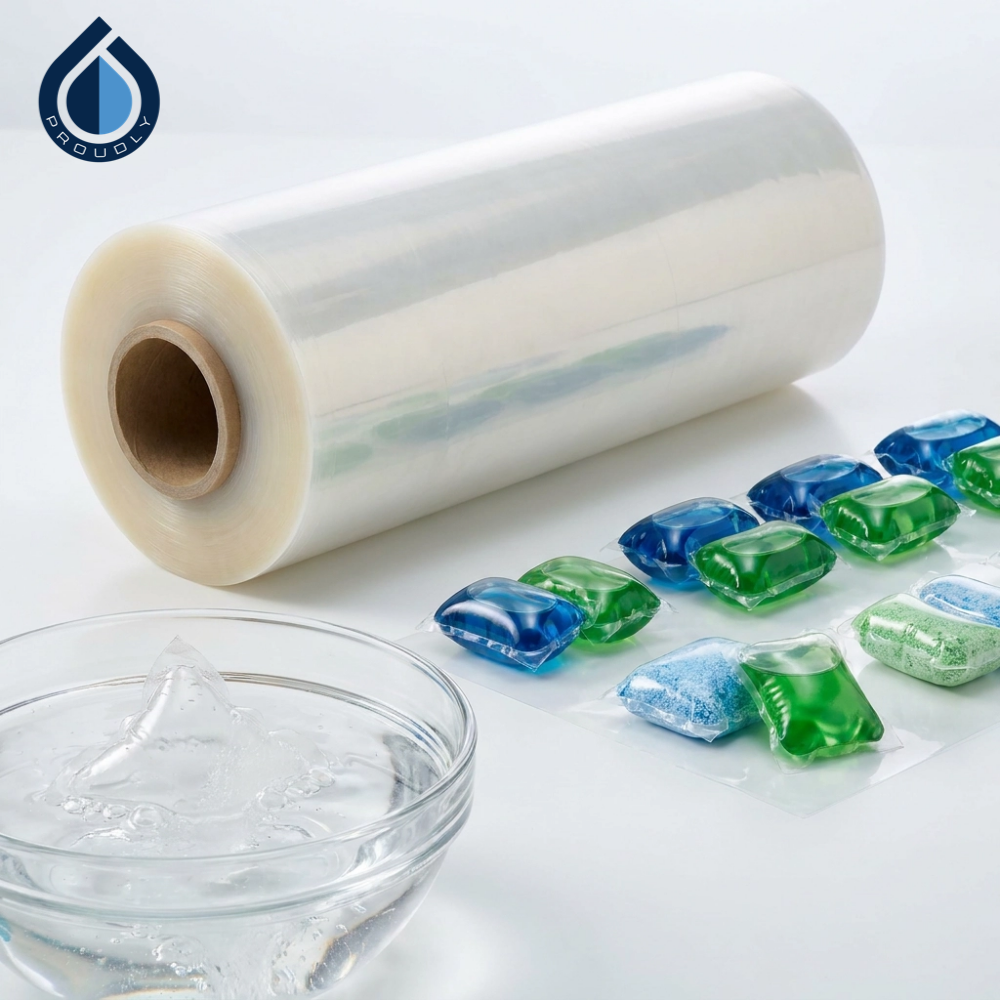
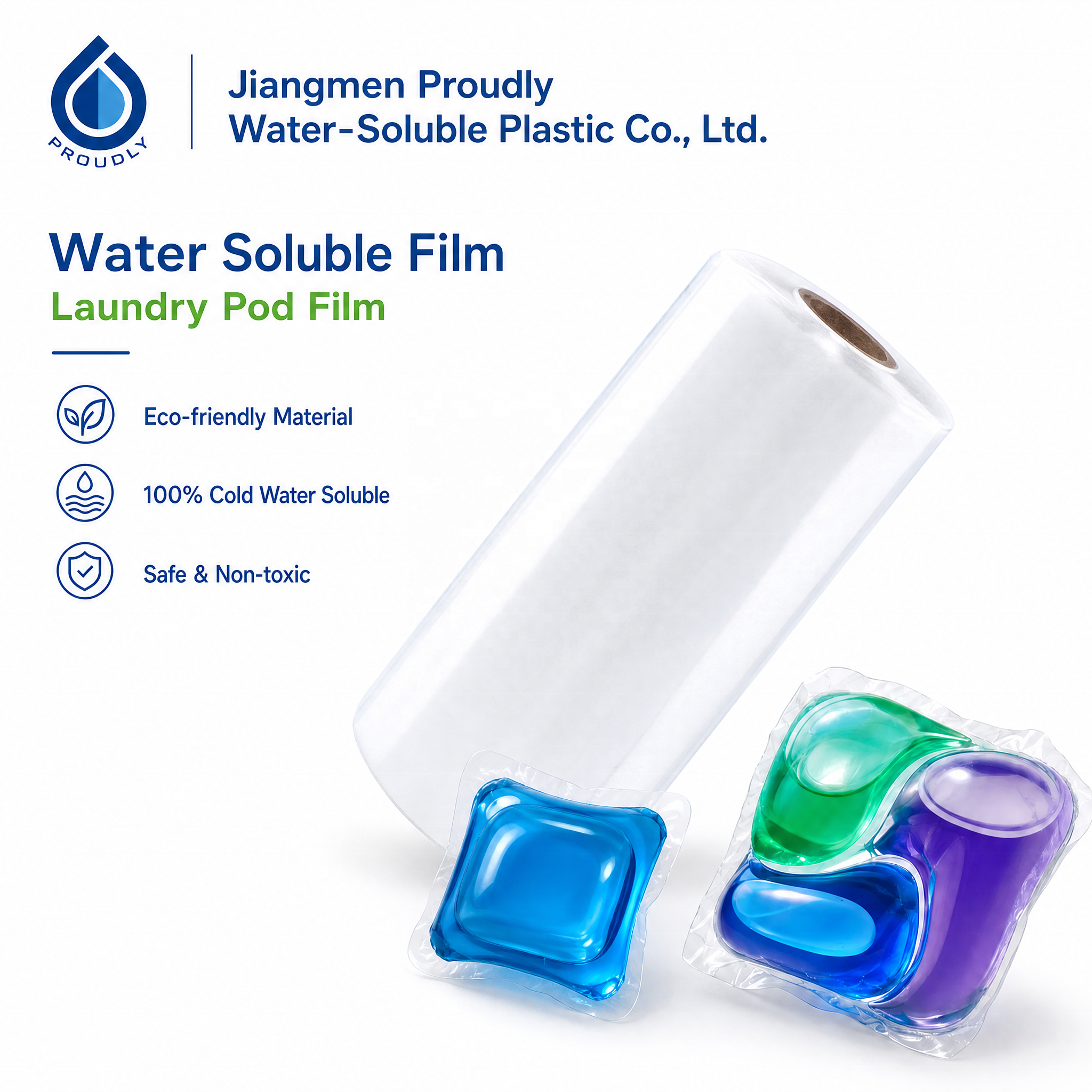
The short answer is: it depends on the quality and formulation of the film. Not all PVA film is created equal. Industry studies have shown that biodegradation rates can swing dramatically based on manufacturing standards, thickness, and the specific blend of raw materials used.
Here's a breakdown of how different biodegradation conditions typically affect PVA film:
Condition | Timeframe | Biodegradation Rate |
|---|---|---|
Composting conditions | 180 days | ≥90% |
Sewage water conditions | 72 days | ≥75% |
Low-temperature, low-microbial water | Several months or longer | Significantly reduced |
High-quality engineered film | 72–180 days | 75–90%+ |
As the table shows, PVA film is fully capable of achieving high biodegradation rates, but only under the right conditions and with the right film composition. This is precisely why not every brand's claims hold up equally well under scrutiny. Cheaper, thinner films manufactured without rigorous testing can underperform, reinforcing the public's skepticism that detergent pods are secretly contributing to microplastic buildup.
This is where the conversation shifts from chemistry to accountability. Companies that specialize in water-soluble packaging have spent years refining formulations specifically to close the gap between "dissolves" and "fully biodegrades." Jiangmen Proudly Water-soluble Plastic Co., Ltd, a manufacturer based in Guangdong, China, has focused on this exact challenge since 2004, developing PVA film engineered to meet strict environmental benchmarks rather than the industry minimum.
Proudly's film has been tested for ecotoxicity and heavy metal content, both of which passed safety evaluations, and the company reports biodegradation rates of 90% or higher within 180 days under composting conditions and 75% or higher within 72 days under sewage water conditions. These numbers matter because they represent film that doesn't just vanish from sight, it actually completes the chemical process that prevents long-term environmental accumulation. A laundry capsule built with film like this is far less likely to leave behind the kind of residual polymer fragments associated with microplastic concerns.
This distinction is also why ingredient sourcing and manufacturing transparency should matter more to consumers than marketing claims alone. A pod that advertises itself as "water-soluble" isn't automatically eco-friendly. The real test is whether the film has been independently verified for both dissolution speed and complete biodegradation under realistic environmental conditions.
For households that want to reduce their environmental footprint without giving up the convenience of pre-measured detergent, the solution isn't necessarily to abandon pods altogether. It's to pay closer attention to how the film inside them is made.
Film quality varies between manufacturers, and the difference shows up in real-world outcomes. Thicker, well-engineered PVA film dissolves at a controlled rate that gives wastewater systems time to process it properly, rather than overwhelming treatment plants with polymer loads they aren't equipped to break down quickly. This is one of the reasons GX-type water-soluble film, designed specifically for powder and liquid capsule packaging, has gained traction across markets in Europe, North America, and mainland China. A laundry pod film formulated with these standards in mind offers a meaningfully different environmental outcome compared to generic, untested alternatives.
Consumers don't need a chemistry degree to make better choices here. Looking for brands that publish biodegradation testing data, third-party safety certifications, or ISO9001 manufacturing credentials is a practical way to separate genuine environmental performance from vague sustainability marketing.
The truth about PVA film sits between the two extremes of the debate. It isn't an environmental disaster, but it also isn't automatically harmless just because it disappears in your washing machine. The real variable is manufacturing quality, and that's a factor consumers can actually evaluate before they buy.
As more independent testing emerges and manufacturers compete on biodegradability rather than just convenience, the gap between poorly made film and properly engineered film will likely become more visible to the average shopper. Until then, checking for documented biodegradation rates and safety testing remains the most reliable way to know whether the pod in your laundry room is doing what it claims.