- All
- Product Name
- Product Keyword
- Product Model
- Product Summary
- Product Description
- Multi Field Search
 English
Views: 0 Author: Site Editor Publish Time: 2026-10-14 Origin: Site
Breaking into the laundry capsule market looks simple from the outside. Mix a detergent formula, wrap it in film, package it attractively, and ship it out. In reality, the hardest part of the process has nothing to do with marketing or packaging design — it's the laundry pod film itself.
For brands and private-label manufacturers considering a laundry detergent pod line, the film that encases each dose is the single component that determines whether a product succeeds or fails on shelves. Get the film wrong, and you end up with sticky residue, premature dissolving during shipping, or complaints about pods that won't break down in cold water. Get it right, and you have a laundry capsule that performs consistently, ships safely, and meets the environmental standards consumers now expect.
This post walks through what manufacturers should understand before entering the laundry capsule business, from film selection to production equipment and long-term sustainability considerations.
A laundry capsule is really two products in one: the detergent formula inside and the water-soluble film wrapped around it. Most new entrants to the market focus heavily on the first and underestimate the second.
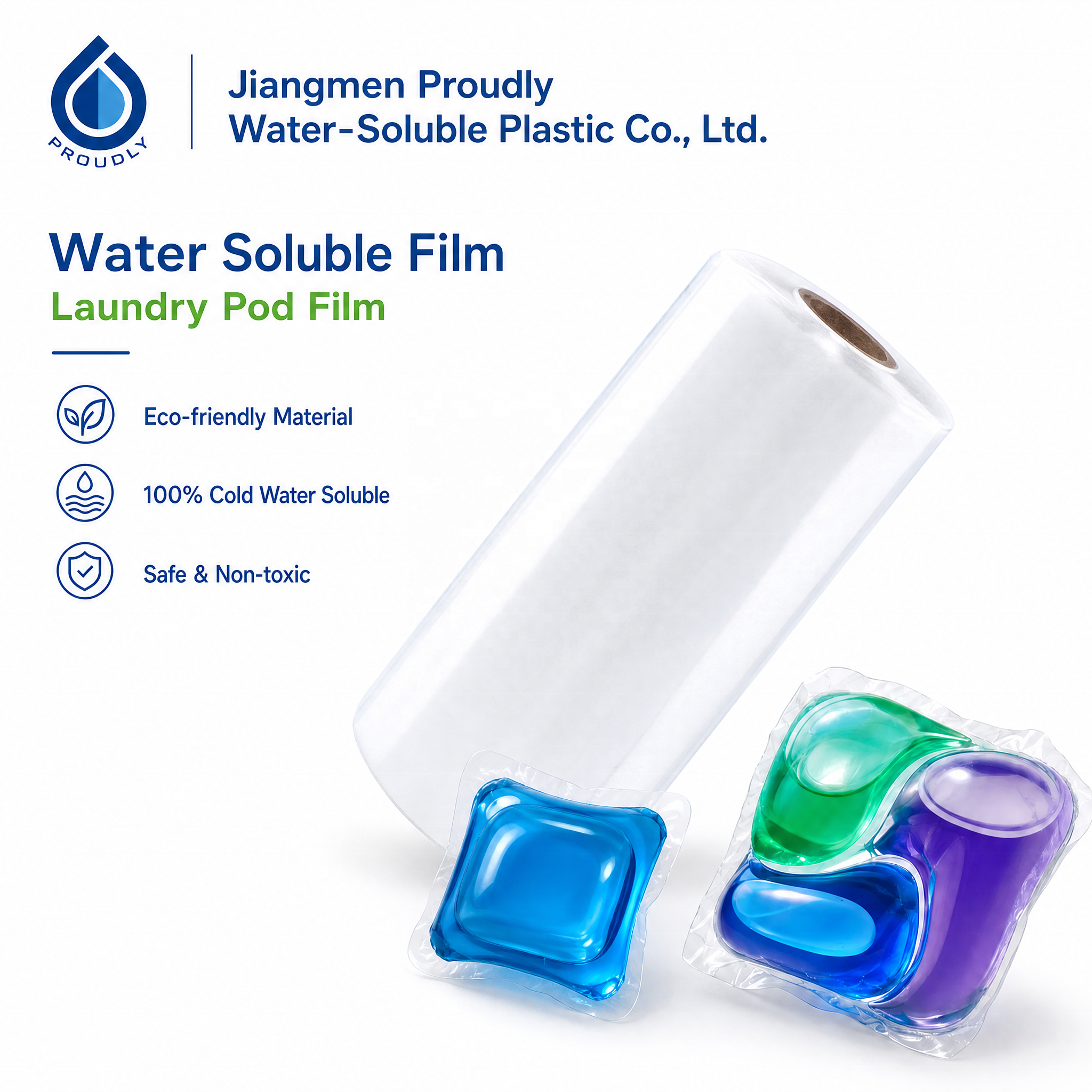
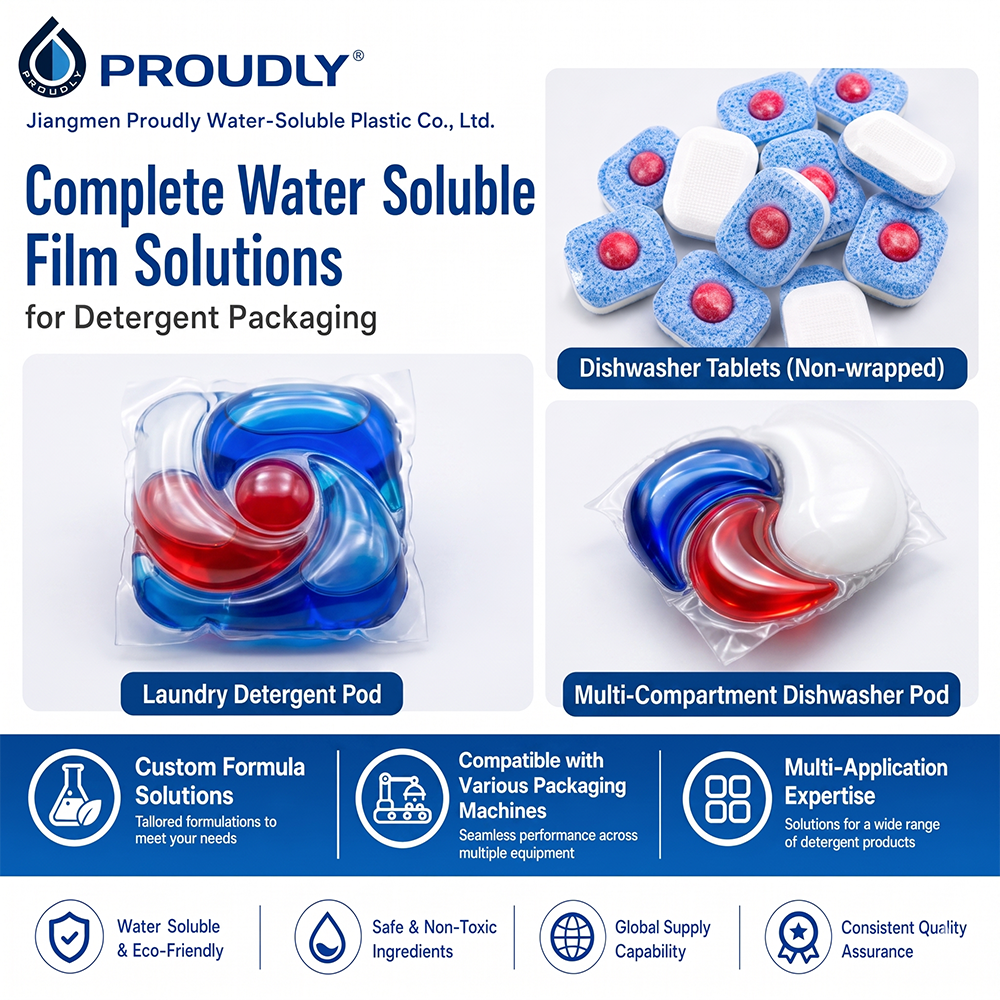
The film, typically made from polyvinyl alcohol (PVA), has to do several contradictory jobs at once. It needs to be tough enough to survive packing, shipping, and handling without tearing, yet dissolve quickly and completely once it contacts water. It has to hold incompatible detergent chemicals — enzymes, surfactants, brighteners — in separate chambers without any of them leaking or degrading the film from the inside. And increasingly, it needs to break down safely in the environment rather than persisting as microplastic waste.
Manufacturers who treat film sourcing as an afterthought often discover the problem only after a batch has shipped: customer complaints about undissolved residue in cold cycles, laundry detergent pod capsules sticking together in humid storage conditions, or regulatory pushback in markets with tightening rules on single-use plastics.
Before committing to a supplier, brands should ask about a few specific technical benchmarks:
Dissolving temperature and speed. Does the film perform consistently across cold, warm, and hot cycles, or only under certain conditions?
Tensile strength. Can the film withstand automated filling, sealing, and transport without tearing?
Biodegradability data. Has the film been independently tested, and what percentage breaks down within a defined timeframe?
Toxicity testing. Has the film passed ecotoxicity and heavy metal testing, confirming it's safe once it enters the water supply?
Suppliers that can answer these questions with verified data — rather than general marketing claims — are the ones worth building a long-term relationship with.
Jiangmen Proudly Water-soluble Plastic Co., Ltd. is one example of a manufacturer that has built its business specifically around solving these technical challenges. Proudly has spent more than 19 years developing water-soluble and biodegradable materials, and its GX-series PVA laundry pod film is engineered specifically for laundry capsule applications involving both powder and liquid formulas.
The GX film is adjustable for dissolving temperature and speed, which allows capsule manufacturers to tune the film to their specific detergent formulation and target wash conditions, including cold-water cycles where many cheaper films fail to fully dissolve. It has also passed ecotoxicity and heavy metal testing, and Proudly reports a biodegradability rate of over 90% within 180 days under composting conditions, and roughly 75% within 72 days under sewage water conditions. For brands trying to meet increasingly strict sustainability claims, having independently verifiable figures like these matters, both for regulatory compliance and for consumer trust.
Proudly supplies this laundry pod film to capsule manufacturers across Europe, North America, and China, giving it visibility into how different markets regulate and test laundry capsule products — knowledge that smaller or newer film suppliers typically haven't had time to build.
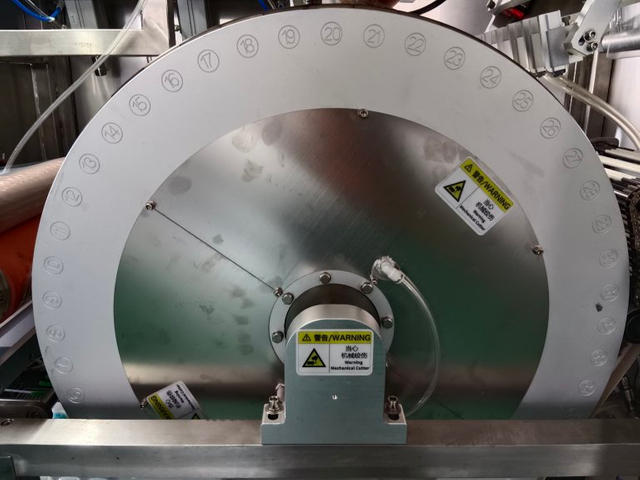
One detail that often surprises new entrants to the laundry capsule market is how closely film performance and filling equipment are linked. A film that works perfectly on one filling machine may behave differently on another, depending on sealing temperature, chamber design, and line speed.
This is why some film suppliers, Proudly included, also manufacture laundry pod filling machines. Supplying both the material and the equipment it's designed to run on removes a significant variable from the development process. Instead of troubleshooting whether a production issue originates from the film or the machine, brands working with a single-source supplier can resolve problems faster and shorten the overall development timeline.
For a company launching its first laundry detergent pod line, this kind of integrated support can be the difference between a six-month development cycle and one that stretches well past a year.
Consumers are paying closer attention to what their laundry products are made of, and regulators are following suit. Several markets have moved to restrict single-use plastics, and laundry capsules — despite being small — have come under scrutiny because of how widely they're used and how easily poor-quality film can end up as microplastic pollution.
This regulatory direction favors brands that have already invested in verified biodegradable film. Manufacturers that can show independent test data on biodegradability, ecotoxicity, and heavy metal content will have an easier time meeting new requirements as they roll out, while those relying on unverified or lower-grade PVA film risk reformulating their products under pressure later.
For brands evaluating whether to enter the laundry capsule category now, this trend is worth factoring into the decision. Partnering with a film supplier that has nearly two decades of formulation experience, rather than a newer entrant still refining its process, reduces the risk of having to switch materials mid-way through a product's life cycle.
Entering the laundry capsule category doesn't require years of in-house chemistry expertise. What it requires is choosing the right partners early. A detergent formulation that performs well, paired with a reliable laundry pod film and filling equipment that's been tested together, puts a new laundry detergent pod in a strong position before it ever reaches a store shelf.
Brands exploring this space should start by requesting technical data sheets from potential film suppliers, not just product samples. Ask for dissolving performance across temperature ranges, biodegradability percentages with testing methodology, and confirmation of toxicity testing. These details reveal far more about long-term reliability than a finished sample capsule ever will.
Companies like Jiangmen Proudly Water-soluble Plastic Co., Ltd., which supply both the laundry pod film and the filling machines used to produce capsules, offer a practical starting point for brands that want to shorten development time without sacrificing product quality. More information on their water-soluble film and laundry pod production solutions is available at proudly.com.cn.