
- All
- Product Name
- Product Keyword
- Product Model
- Product Summary
- Product Description
- Multi Field Search
 English
Views: 0 Author: Site Editor Publish Time: 2026-09-18 Origin: Site
Most people never think twice about what happens after they toss a wrapper, bag, or pouch into the trash. Yet the materials behind those disposable items are quietly undergoing a transformation, one that could change how entire industries think about single-use packaging. From dog walks to laundry rooms to feminine care aisles, a new generation of water-soluble film is replacing plastic in places where plastic never really belonged.
This shift isn't being driven by marketing slogans or vague sustainability pledges. It's grounded in material science that lets packaging dissolve, biodegrade, or flush away safely once it has done its job. The result is a category of products that solve a problem most consumers didn't realize they could solve: not reducing how much they use, but changing what happens to it afterward.
This post looks at how dissolvable film technology works, where it's already being used, and why manufacturing standards matter more than most buyers realize.
Single-use plastic earned its place in modern life because it's cheap, strong, and endlessly convenient. A polyethylene bag holds its shape, resists tearing, and seals tightly — qualities that make it ideal for packaging everything from groceries to medical waste. But those same qualities are exactly why it lingers in landfills for decades, sometimes centuries, long after its contents have decomposed.
This mismatch shows up most clearly in products where the packaging is used for mere seconds before being discarded. A pet owner picking up after a dog, a traveler disposing of a feminine hygiene product, or a parent tossing a laundry pod wrapper are all performing quick, forgettable actions. But multiplied across millions of households, those small moments add up to a significant and largely invisible plastic burden.
The alternative gaining traction across these categories is PVA (polyvinyl alcohol) film — a plant-derived polymer engineered to dissolve on contact with water. Unlike polyethylene, which resists breakdown almost indefinitely, PVA film can be formulated to hold its shape during handling and then dissolve quickly once it's no longer needed, whether that trigger is a flush, a wash cycle, or a composting environment.
What makes this technology credible rather than aspirational is the testing behind it. Under composting conditions, well-formulated PVA film can reach biodegradability rates of 90% or higher within 180 days. Under sewage water conditions, that figure can reach 75% within just 72 days. These are the kinds of benchmarks used to certify packaging materials for commercial and regulatory use, not casual estimates.
The film is also adjustable by design. Manufacturers can tune the dissolving temperature and speed depending on the application, which is part of why the same base material can serve such different products.
What's striking about water-soluble film isn't just its performance. It's how many unrelated product categories rely on the exact same material science to solve very different disposal problems.
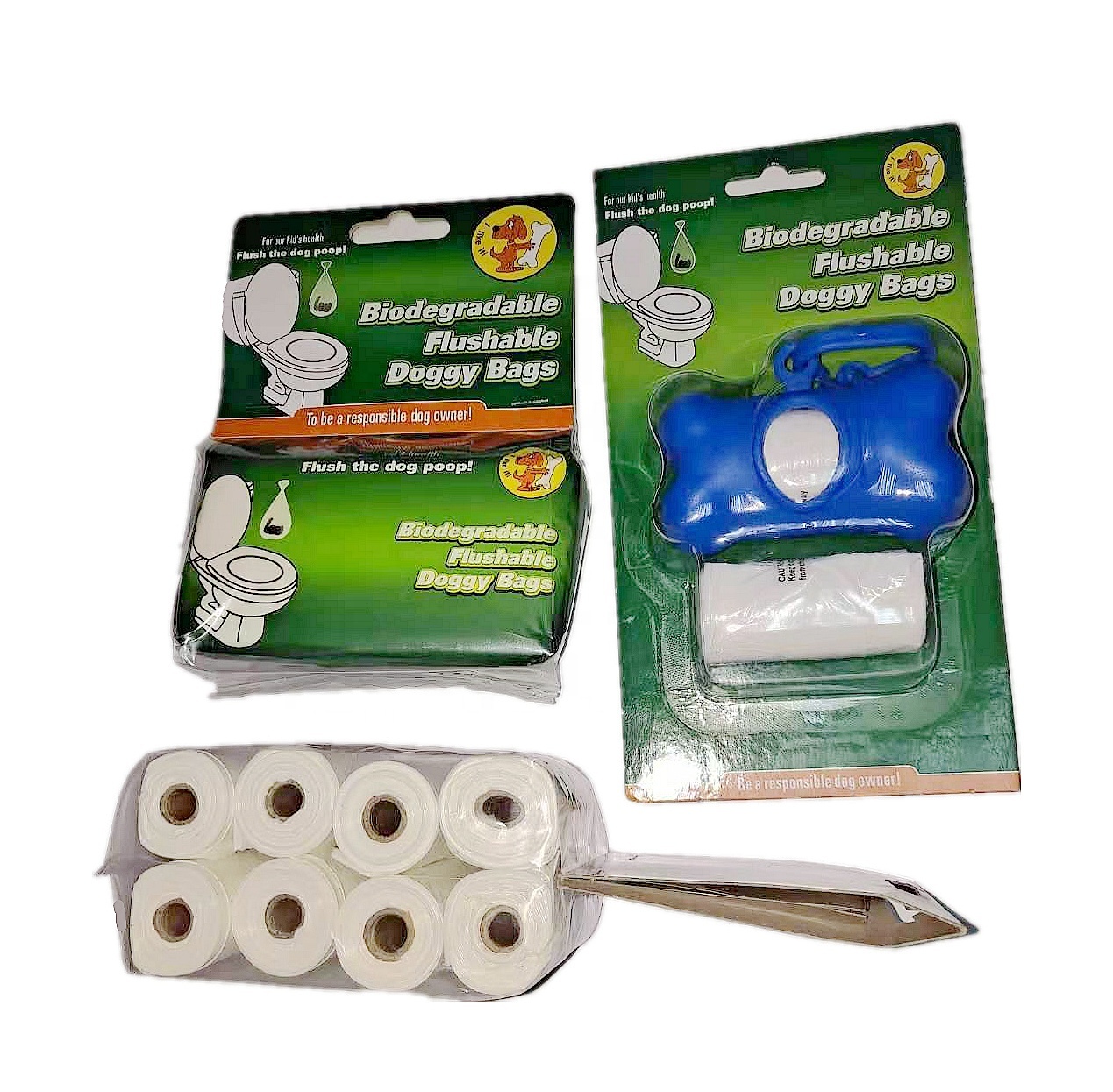
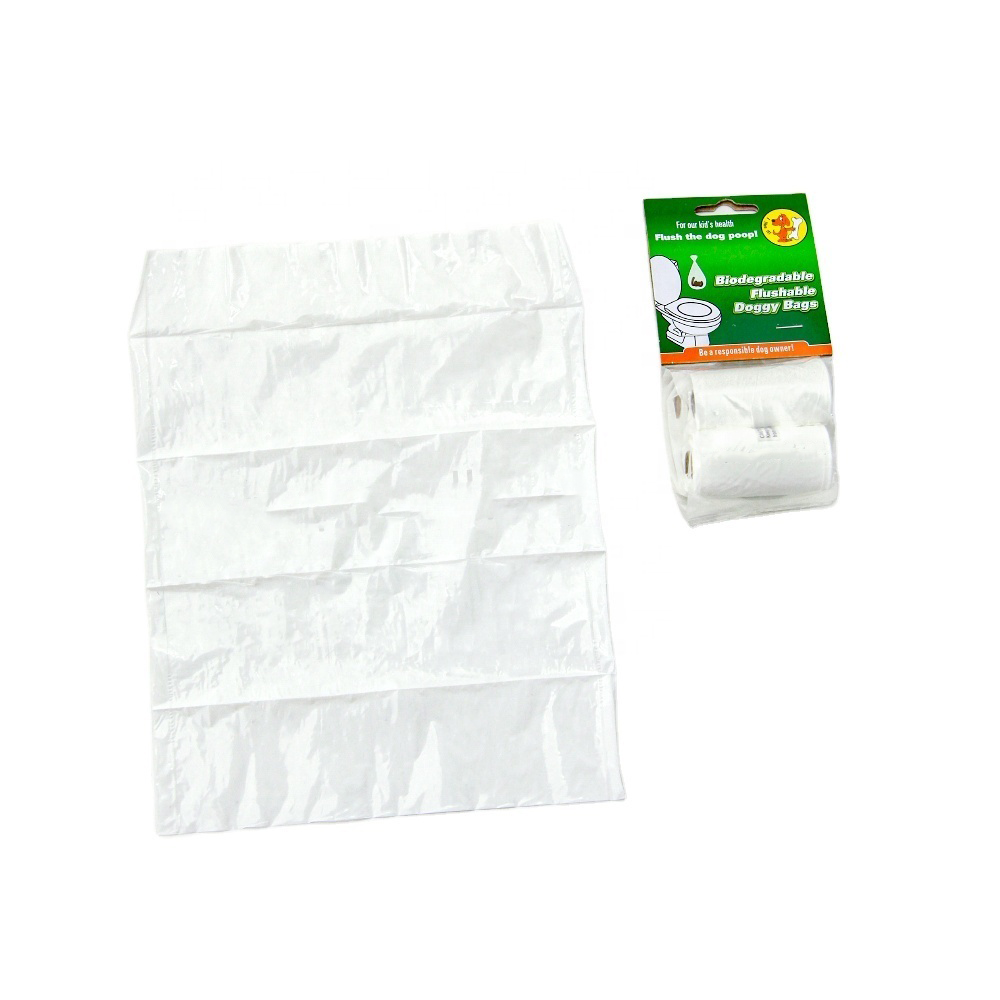
Flushable Pet Waste Bags address a problem most dog owners never question: the plastic bag used to collect waste on a walk typically outlives the dog by generations. A Flushable Pet Waste Bag replaces that plastic with dissolvable film, letting the bag and its contents break down together instead of sealing organic waste inside something that never degrades.
Flushable & Compostable Feminine Pad Packaging tackles a similar disposal dilemma in a completely different context. Feminine hygiene products have long relied on plastic wrappers that follow the same landfill trajectory as pet waste bags. Packaging built from water-soluble film gives users a way to dispose of wrappers without adding to long-term plastic accumulation, without changing how the product is used day to day.
Biodegradable individual pouches, often used for laundry detergent capsules, apply the same principle to household cleaning products. The pouch dissolves completely during the wash cycle, releasing its contents without leaving behind a plastic shell that has to be fished out or thrown away.
The comparison below shows why manufacturers across these categories are reconsidering their packaging formulations:
Feature | Traditional Plastic Bag | Water-Soluble Biodegradable Bag |
|---|---|---|
Base Material | Polyethylene (petroleum-based) | PVA film (plant-derived polymer) |
Disposal Method | Landfill only | Flushable, compostable, or dissolvable in water |
Breakdown Time | Decades to centuries | Up to 90% within 180 days (composting) |
Marine Safety | Harmful if ingested by wildlife | Non-toxic; passes ecotoxicity testing |
Contact Safety | Not food-safe | Safe, non-toxic, suitable for sensitive applications |
Not every water-soluble film performs to the same standard, which is why the manufacturer behind the material matters as much as the material itself. Jiangmen Proudly Water-soluble Plastic Co., Ltd. has spent more than 19 years developing functional, biodegradable, and water-soluble packaging for the medical, industrial, agricultural, and consumer goods sectors. The company operates under ISO9001 standards and produces more than 10,000 tons of film annually, giving it a level of manufacturing consistency that smaller or newer producers often struggle to replicate.
That consistency is especially important in categories where safety can't be an afterthought. Proudly's materials have passed ecotoxicity and heavy metal testing, are safe for contact with people, animals, and plants, and are formulated to meet food-contact safety standards. For a pet owner, that translates into a waste bag that dissolves without leaving harmful residue in soil or waterways. For a manufacturer developing hygiene or laundry products, it means being able to back up biodegradability claims with documented test data rather than general assurances.
Choosing dissolvable packaging isn't just about checking a sustainability box. It's a practical decision about how waste behaves once it leaves your hands. Traditional plastic sits in landfills indefinitely, regardless of intentions. Water-soluble film, by design, follows a predictable breakdown timeline, whether through composting, flushing, or washing.
For individual consumers, the easiest starting point is often the smallest one: switching to a Flushable Pet Waste Bag on the next purchase. For manufacturers evaluating packaging for hygiene products or single-dose goods, the opportunity is larger, since the same underlying film technology scales across categories like Flushable & Compostable Feminine Pad Packaging and biodegradable individual pouches without sacrificing strength or reliability.
Either way, dissolvable packaging has moved well past the experimental stage. It's a tested, documented alternative that's already changing how everyday waste gets handled, one small, forgettable disposal moment at a time.
Is water-soluble packaging actually safe for pets and the environment?
Yes. Properly formulated PVA film passes ecotoxicity and heavy metal testing and is non-toxic to people, animals, and plants, making it safe for applications like pet waste bags that come into contact with soil and waterways.
How long does it take for water-soluble film to break down?
Breakdown time depends on conditions. Under composting conditions, biodegradability rates can reach 90% or higher within 180 days. Under sewage water conditions, rates can reach 75% within 72 days.
What products use this type of packaging besides pet waste bags?
The same technology is used in Flushable & Compostable Feminine Pad Packaging and in biodegradable individual pouches for laundry detergent capsules, among other applications.
Why does the manufacturer of the film matter?
Performance and safety vary between producers. Manufacturers with established testing records and certifications, such as ISO9001, are more likely to deliver consistent, verifiable biodegradability and safety results.