
- All
- Product Name
- Product Keyword
- Product Model
- Product Summary
- Product Description
- Multi Field Search
 English
 Views: 0 Author: Site Editor Publish Time: 2026-09-09 Origin: Site
Pet ownership has grown steadily over the past decade, and with it, a mountain of plastic waste that never quite goes away. Every walk around the block usually ends with a knot of polyethylene sealed around dog waste, destined for a landfill where it can take centuries to break down. It's a small ritual most pet owners don't think twice about, yet the cumulative impact adds up fast across millions of households.
That's where a Flushable Pet Waste Bag changes the equation. Instead of trapping waste in plastic that outlives the pet it was collected from, these bags are engineered to dissolve or break down safely, cutting the environmental tail that traditional bags leave behind. This shift isn't just a niche eco-trend — it reflects a broader move toward materials that disappear responsibly rather than pile up.
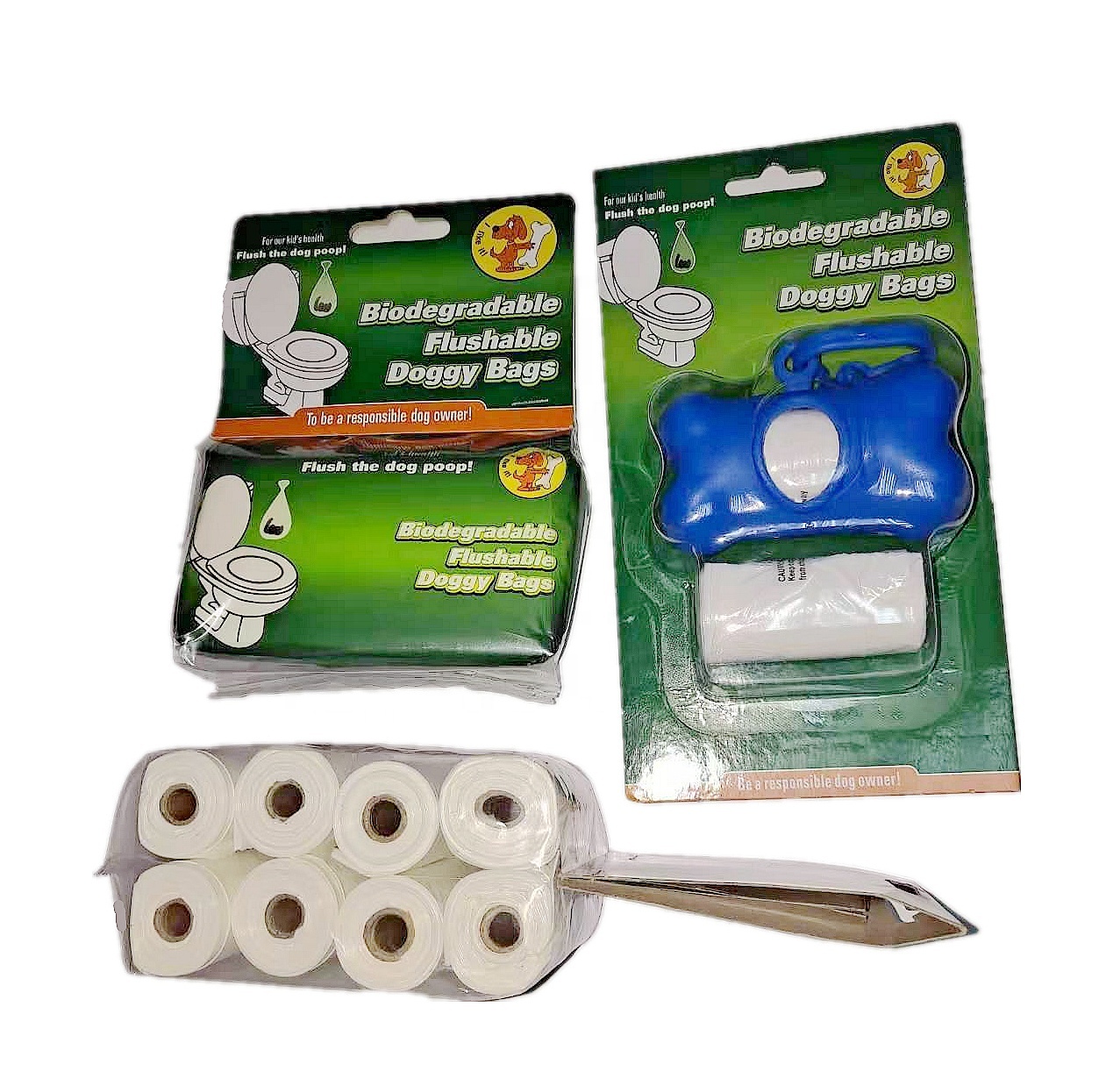
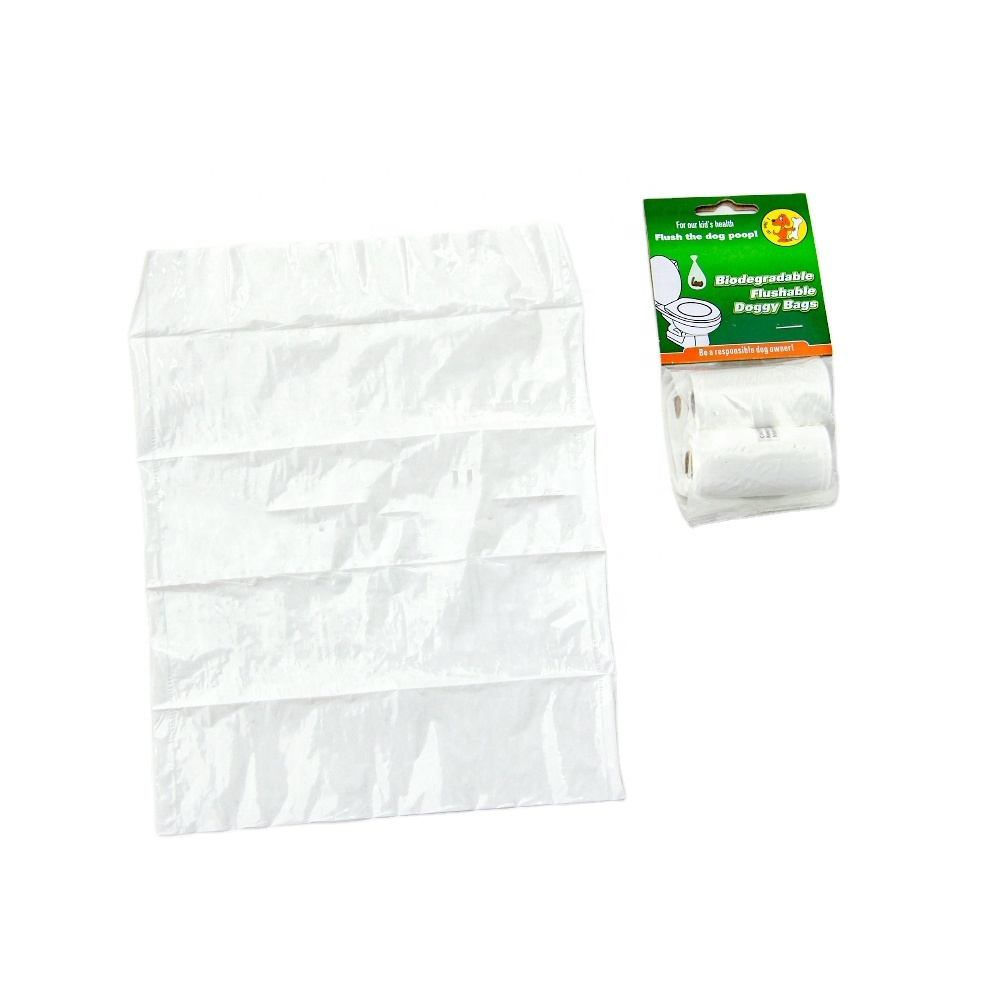
Standard pet waste bags are made from polyethylene, the same petroleum-based plastic used in grocery bags. They're cheap, sturdy, and completely unwilling to decompose within any reasonable timeframe. Once tied off and tossed, they sit in landfills for generations, sealed tight around organic waste that could otherwise break down naturally.
The irony is that pet waste itself is biodegradable. It's the packaging around it that turns a natural process into a long-term pollution problem. Recognizing this mismatch, manufacturers have spent years developing water-soluble and compostable alternatives that let the bag disappear along with what's inside it.
Water-soluble packaging, typically made from PVA (polyvinyl alcohol) film, dissolves when exposed to water and disintegrates in composting or sewage conditions. The dissolving temperature and speed can be adjusted depending on the intended use, which means a bag can stay strong during handling but break down quickly once it's no longer needed.
Independent testing standards give a clearer picture of how fast this breakdown happens. Under composting conditions, biodegradability rates of 90% or higher within 180 days are achievable with well-formulated PVA film. Under sewage water conditions, that figure can reach 75% within just 72 days. These aren't marketing estimates — they're the kind of benchmark data used to certify eco-friendly packaging materials for commercial use.
Here's a quick side-by-side comparison of how the two materials stack up:
Feature | Traditional Plastic Bag | Water-Soluble Biodegradable Bag |
|---|---|---|
Base Material | Polyethylene (petroleum-based) | PVA film (plant-derived polymer) |
Disposal Method | Landfill only | Flushable, compostable, or dissolvable in water |
Breakdown Time | Decades to centuries | Up to 90% within 180 days (composting) |
Marine Safety | Harmful if ingested by wildlife | Non-toxic; passes ecotoxicity testing |
Contact Safety | Not food-safe | Safe, non-toxic, suitable for sensitive applications |
The table makes it obvious why more pet product manufacturers are switching formulations. It's not just about being "green" for marketing purposes — it's about closing a waste loop that plastic bags simply can't close.
Pet waste bags are just one application of a much larger material category. The same dissolving film technology is behind Flushable & Compostable Feminine Pad Packaging, which addresses a similar disposal dilemma. Feminine hygiene packaging has traditionally relied on plastic wrappers that end up in the same landfill cycle as pet waste bags, so switching to a water-soluble film gives consumers a way to dispose of packaging without contributing to long-term plastic accumulation.
The technology also extends to household products that need single-use, pre-measured packaging. A Biodegradable individual pouch used for laundry detergent capsules works on the same principle — the film dissolves completely in water, releasing its contents without leaving behind a plastic shell. Whether it's cleaning up after a dog, managing a monthly hygiene routine, or doing laundry, the underlying material science stays consistent: strong enough to hold its shape, but built to vanish once it's done its job.
Not all water-soluble films perform the same way, which is why sourcing from an established manufacturer matters. Jiangmen Proudly Water-soluble Plastic Co., Ltd. has spent more than 19 years focused specifically on functional, biodegradable, and water-soluble packaging materials, serving medical, industrial, agricultural, and consumer goods sectors. The company operates under ISO9001 standards and produces over 10,000 tons of film annually, giving it the kind of manufacturing consistency that smaller producers often can't match.
That consistency matters most in safety-critical categories. Proudly's materials have passed ecotoxicity and heavy metal testing, are safe for contact with people, animals, and plants, and are formulated to be non-toxic enough for food-contact applications. For pet owners, that means a waste bag that dissolves without introducing harmful residues into soil or waterways. For manufacturers building hygiene or laundry products, it means a packaging partner that can back up biodegradability claims with test data rather than vague promises.
Choosing a flushable or biodegradable packaging format isn't just a sustainability checkbox — it's a practical decision about how waste actually behaves after it leaves your hands. Traditional plastic sits in landfills indefinitely. Water-soluble film, by contrast, is designed to disappear on a predictable timeline, whether that's during a compost cycle, a flush, or a wash.
Pet owners looking to reduce their household's plastic footprint can start with something as simple as switching their next bag purchase. Manufacturers evaluating packaging options for hygiene products or single-dose goods have an even bigger opportunity, since the same film technology scales across multiple product categories without sacrificing performance. Either way, the shift toward dissolvable packaging is no longer an experimental idea — it's a proven, testable alternative that's already reshaping how everyday waste gets handled.